
Jeffrey L. Bernstein • Eastern Michigan University This essay originally appeared in the Political Science Educator’s December 2005 edition. If your graduate school experience was similar to mine, teaching and research were viewed as two very different aspects of the professional career, with an uneasy interaction between them. Time devoted to teaching was viewed as…
Nancy E. Wright • Long Island University – Brooklyn This essay originally appeared in the Political Science Educator’s December 2005 edition. Class participation, while always a component of course grades, is not always assigned as useful a role as it can play. Granted, if it comprises only ten or fifteen percent of a student’s grade,…
Written by Amy Cabrera Rasmussen, Professor of Political Science at California State University, Long Beach During this unusual election season, there rightly has been much attention to the importance of making a plan to vote. What might come immediately to mind: making sure one is registered, ensuring one has their voting materials, knowing how and…
By Abe Goldberg There is great reason to celebrate youth voter turnout following the spike in participation during the most recent midterm elections. Specifically, college student turnout jumped from just 19% in 2014 to 40% in 2018 according to the Institute for Democracy and Higher Education’s Democracy Counts. At James Madison University, the student voting…
By Lilly J. Goren Within the American popular culture landscape, the president and the presidency has long been a unique presence, in part because this office and the individual who holds it are often within the popular gaze of the citizenry. From the very early days of the republic, the populace was quite captivated by…
By Caroline Harper On August 11, 2020, presidential candidate Joe Biden announced Senator Kamala Harris as his pick for vice president in the 2020 election. While Harris’ nomination is not the first time a woman has been selected as a vice presidential nominee, it is the first time that a Black and Indian-American woman and…
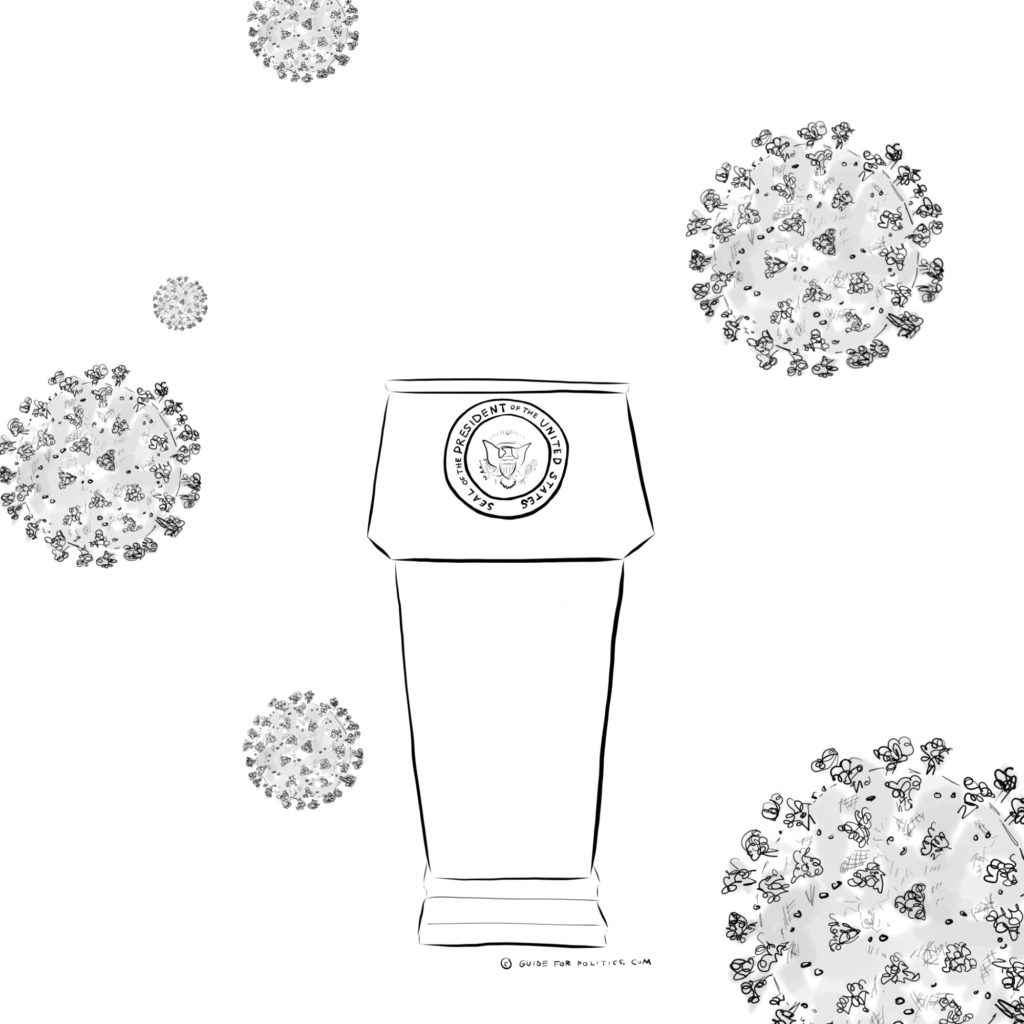
Amy Cabrera Rasmussen, Professor of Political Science at California State University, Long Beach This week, something happened that has the potential to change some of how we understand the pandemic: the President of the United States tested positive for COVID-19. At this point, the better part of a year into the public health crisis, it…
By Steven Adelson It was the Summer of 2012 and I had just finished creating my class schedule at new student orientation for my first semester in college. Before leaving, I noticed a table with a stack of blank voter registration applications and some pens. I wasn’t really sure what to do because there was…
By Clarissa Unger Political scientists have a responsibility to encourage their students’ participation in our democracy and this year should be no exception. The unique and extensive challenges brought on by the COVID-19 pandemic require each of us to commit not only to measures to ensure the public health and safety of our communities but…
“Black Voter Turnout in 2020: The Intersections of Politics, Protest and Pandemics” Thursday, October 8th, at 3:00-4:30 PM EDT | Register Here With three weeks to go to the historic 2020 presidential election, the National Conference of Black Political Scientists (NCOBPS) and the American Political Science Association (APSA) present, “Black Voter Turnout in 2020: The…