
Please scroll down to access APSA's Teaching and Learning books, reports, and journals.
APSA's Teaching Civic Engagement Book Series
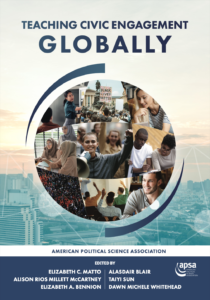
Provides a wide range of pedagogical tools to help the current generation learn to effectively navigate debates and lead changes in local, national, and global politics.
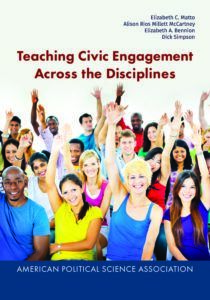
Explains how campuses can promote high quality education for civic engagement, providing a wealth of examples of successful practices, techniques, and assessment strategies.

Provides an exploration of key theoretical discussions, innovative ideas, and best practices in educating citizens in the 21st century.
Pedagogical Best Practices
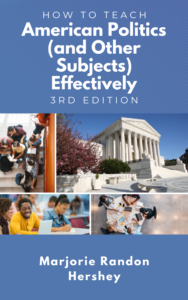
After spending several decades leading her department's graduate seminar introducing the mechanics of political science education, Dr. Marjorie R. Hershey shares her ideas, experiences, and perspectives.
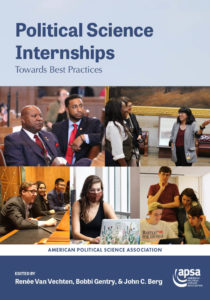
Political Science Internships: Towards Best Practices builds on a robust body of evidence that demonstrates the integrative power of internships to help undergraduate students learn by doing.
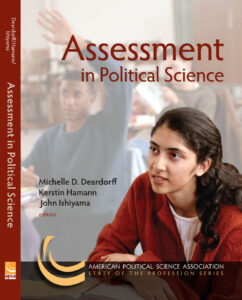
In addition to general assessment tools, the authors and editors provide guidance on assessing learning in special situations such as in online environments and experiential programs
Rethinking Political Science Education
Journal of Political Science Education

The Journal of Political Science Education is political science’s leading journal on teaching and learning that publishes the highest quality scholarship and research on teaching and pedagogical issues in political science. We welcome submissions that represent the full range of questions, issues and approaches regarding political science education, including teaching-related issues, methods and techniques, learning/teaching activities and devices, educational assessment in political science, graduate education, and curriculum development. We particularly welcome articles that reflect the scholarship of teaching and learning, and/or works that are of practical use to the readers of the Journal of Political Science Education, and address topics in an empirical way, making use of the techniques that political scientists use in their own substantive research. While significant and detailed case studies are also welcome, the editors encourage authors to focus on how these can be transferred to other contexts or how they illustrate the practical application of theories and approaches.