Teaching American Politics in Times of Uncertainty
Michelle D. Deardorff, University of Tennessee at Chattanooga
Allison Rank, University of Northern Iowa
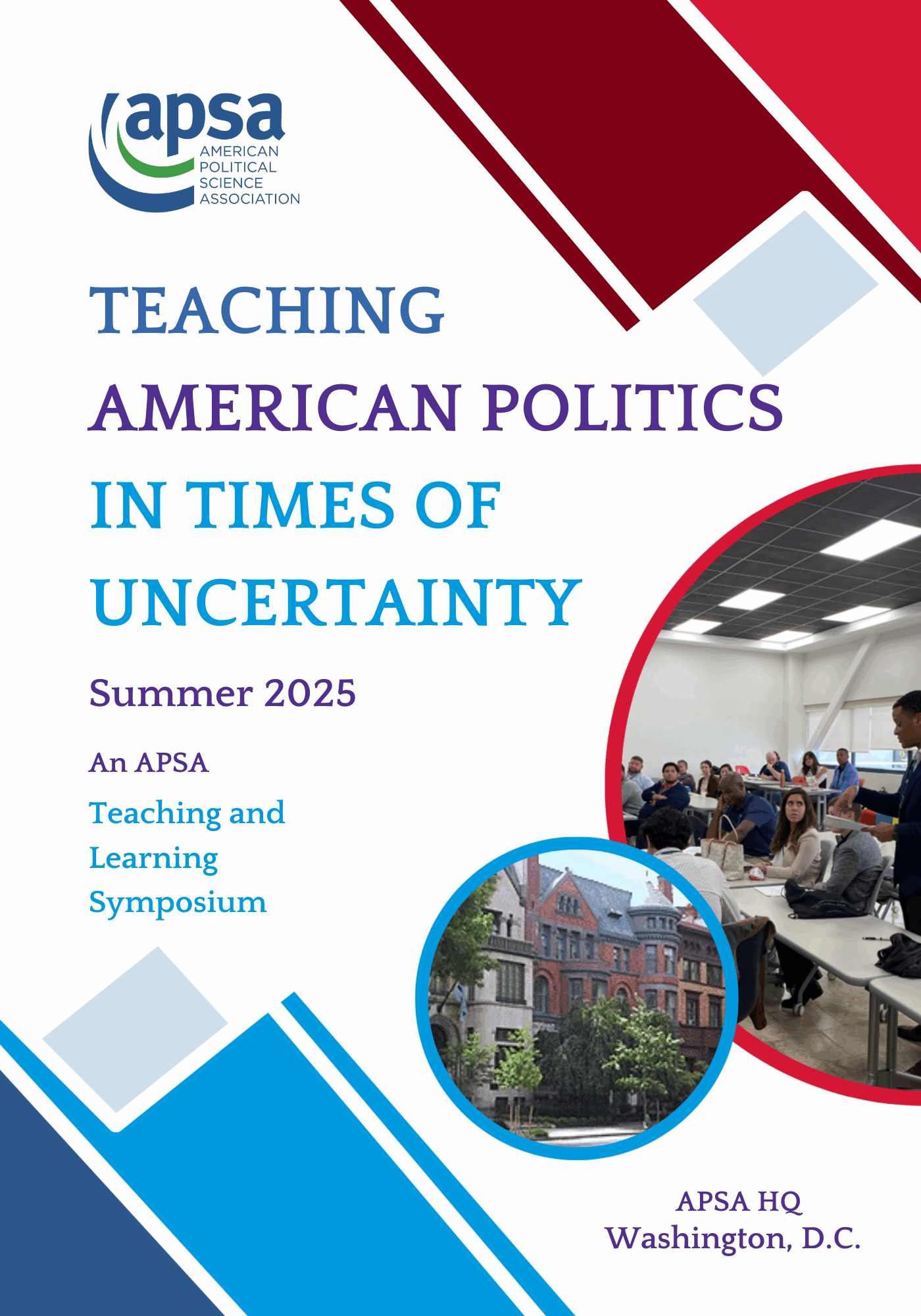
In late July, twelve political science educators gathered online to discuss our various approaches to teaching introductory American government and politics courses. As we heard from each other about engaging students around motivating questions (e.g., Is America the best democracy? What happens when trust erodes?), data sets (e.g., VDem, Essential Elements), and diagnostics (e.g., Four Quads, Janda & Goldman), we kept returning to one central question: What are you removing from your class to make room for X? We wrestled together with the reality that teaching American/U.S. Government/Politics has to change in response to our current political realities. As you will see in the resources, there are many new, exciting ways to introduce these issues to students, but this will mean some of the traditional canon will need to be replaced. We found the answer to this question to be idiosyncratic and dependent upon the expertise of the faculty member and the requirements of the curriculum.
Ultimately, while there is some basic content an introductory survey course in American politics must cover, most of us agreed that the traditional material presented in the standard way is unlikely to meet the challenge of the current moment. Prepping and teaching this course feels to many like running a gauntlet consisting of students’ shifting habits around reading and participation; state-mandated specific readings, content, and/or assessments; the rapidly shifting political landscape; and growing public cynicism about the American political system. Faculty participating in this symposium have responded to this challenge by intentionally questioning the purpose of such courses for their campus and curriculum while using their answers to redesign courses and assignments.
Broadly speaking, the work presented during our symposium emphasized three approaches, which organize this contribution to Educate:
- Building Skills: Introductory courses provide an opportunity to build skills important for student success and citizenship. Instructors intentionally craft assignments to develop students’ analytical skills through connecting political documents to analytical skill building with writing assignments and concept maps.
- Focusing on the Big Questions: A number of instructors orient individual sections of their course – or even the entire course – around an open-ended question or questions. Good questions provide opportunities for students to articulate a viewpoint, consider methods and data appropriate to the discipline, and engage relevant debates, without them feeling coerced to the “right” answer.
- Student-as-Subject: To support students’ perceiving themselves as players in—rather than spectators to—America’s political system, many instructors leverage a range of diagnostics and activities that help students identify their own political histories or perspectives. This personal knowledge then connects to traditional concepts such as ideology and political socialization and better engages students as participants in our governance.
Two notable themes trace across the categories. First, a number of presenters emphasized the importance of placing America in a comparative context. You’ll find this theme across the resources offered. Second, a wide range of resources—many freely accessible—can support our teaching. Along with pursuing the specific categories, we encourage you to consult the Resource Annotated Bibliography which provides links to the various resources featured across our collection including data sets, dialogues, diagnostics, and readings. For each resource, you’ll find a brief summary and a note on how it connects to the new APSA Learning Outcomes.